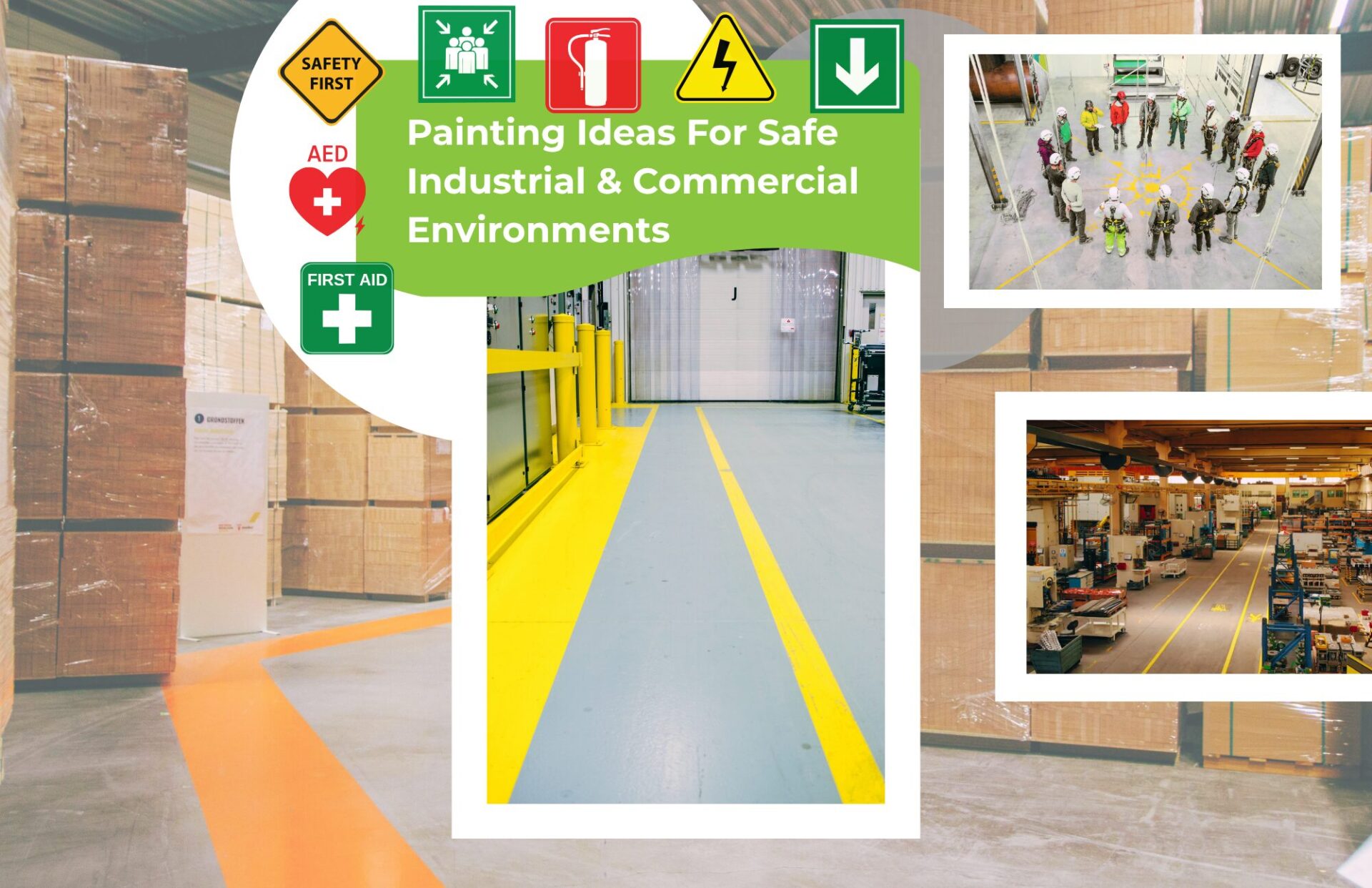
Thoughtful, vigilant painting can help facilitate a safe, standardized environment for all employees, visiting customers, and supplier partners alike.
Applying highly visual, well-planned color combinations & risk-mitigating designations ─ whether on your manufacturing floor, a warehouse & distribution center, around large commercial properties, or even school areas ─ guide the right behaviors and help support a safer environment. Some paint-driven facility safety ideas include:
Color Code Hazards and Safety Zones – use standardized colors to immediately convey potential risk areas such as:
- Yellow = caution, physical hazards, trip and fall areas
- Red = fire equipment, emergency stops, prohibited actions
- Orange = dangerous machine parts or energized equipment
- Green = safety equipment, first-aid stations, safe areas, or muster points
- Blue = informational or mandatory-action areas
- Black & White or Yellow & Black Striping = boundaries and physical hazards
Safe Walking Zones – use paint to designate where people are expected to safely walk without the risk of forklifts, rolling equipment, or hand trucks running into them. An example of using colors to designate status could look like:
- Yellow lines = pedestrian boundary
- White lines = designated walkway
- Crosswalk markings = controlled crossing points
Forklift and Equipment Exclusion Zones – define areas where employees should not stand or where equipment should not be parked. Yellow & black or red & black combinations work well for marking off these types of areas. Some examples include:
- Forklift operating zones
- Crane swing areas
- Loading & unloading areas
- Electrical panels
- Machinery borders
- Material staging areas
Emergency Equipment Areas – brightly painted floor boxes or wall areas can quickly and consistently draw attention to:
- Fire extinguishers
- Fire hoses
- Automated External Defibrillators (AEDs)
- First-aid stations
- Emergency showers
- Eyewash stations
- Emergency exits
Stairs and Steps Visibility – use high-visibility paint or contrasting markings on:
- Stair nosings
- First and last steps
- Handrail areas
- Stairwell floors
Changes in Floor Elevation – paint can make otherwise subtle tripping hazards much more apparent. Some potential applications include:
- Ramps
- Loading docks
- Platform edges
- Pits
- Changes in floor elevation
Safe Standing Areas Plus Visibility Around Machinery – contrasting paint colors can make machinery and its various areas of functionality easier to see. Some ideas include:
- Machine footprints
- Operator stations
- Maintenance zones
- Moving-equipment clearance areas
- Restricted-access areas
6S (Safety, Sort, Shine, Set in Order, Sustain, Standardize) and Tool Shadow Boards Implementations – paint is particularly useful as part of a 6S workplace organization program. Instead of simply telling employees where something belongs, the floor and tool shadow boards visually define its home – and make it obvious to all when a tool or piece of equipment is missing.
One-Way Traffic Flow Reinforcement – painted arrows can establish traffic patterns for:
- Forklifts
- Tugger trains
- Carts
- Delivery vehicles
- Pedestrians